


Indulging in the World of Mulching
Spring has sprung in Minnesota! Are you thinking about putting mulch in your garden or wondering if you should? Resolve to learn more about mulching in your landscape beds this year. As you wander around your gardens and at the local landscape and garden supply stores, you may wonder which type of mulch to use, where to apply it and what time of year is appropriate for such mulch. Read on to find out the answers to these mulching questions.
Mary Gadek, Dakota County Master Gardener

CATEGORIES OF MULCH
ORGANIC
Organic mulches are natural materials that decompose over time, adding nutrients and organic matter to the soil and beneficial microorganisms that inhibit plant diseases. The increased amounts of organic matter will improve soil drainage and moisture retention, reduce soil compaction, and attract earthworms. Because organic mulches decompose, they need to be replaced. Depending on the type of mulch used, replacement intervals vary from one to four years.
Bark: Available in bags or bulk, bark mulch comes in various particle sizes, ranging from fine to large chunks with some decorative colored/dyed options. This attractive mulch is weed-free and decomposes slowly, with cedar and cypress being the slowest. Use bark mulches around trees, shrubs, and roses, as well as in perennial beds.
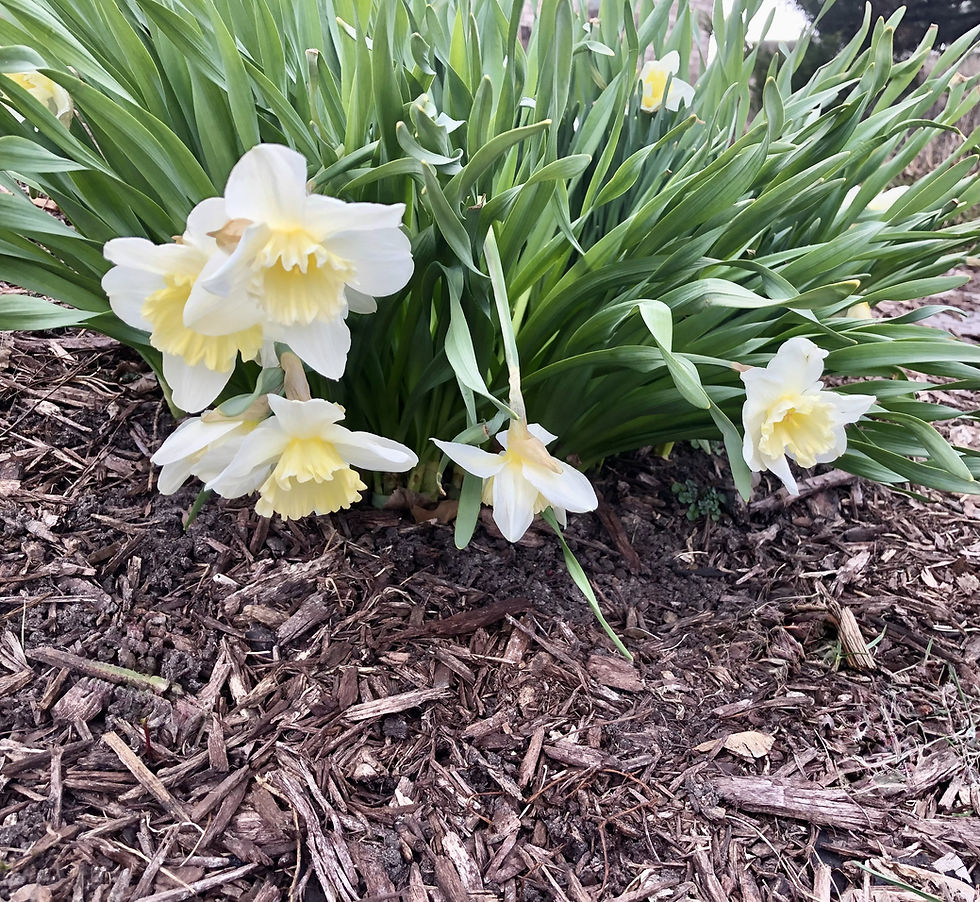
Wood Chips: Wood chips from local arborists, municipal facilities, or waste sites are produced by chipping or shredding tree and shrub trimmings. Shredded mulch is less likely to blow or wash away than chips. Wood chips are best used in most landscape plantings, including around trees, shrubs, and roses, and in perennial beds.
Be aware: Some commercially available wood chips are made by shredding or chipping lumber or pallets. They are an inferior product that breaks down quickly and may contain chemicals. These products are sometimes dyed to mask their origin. Check labels or with your garden center to avoid such products. Wood chips are best used in landscape plantings, such as around trees, shrubs, and roses, and in perennial beds.
Pine Needles: Pine needle mulch, or pine straw, is light, airy, slow to decompose, and attractive. It lasts several years and can be easily removed, if necessary. Pine needles are slightly acidic, although their effect on soil pH is relatively minor. Use pine needles in the landscape, especially around trees and shrubs, and perennials. Available at local garden centers or under the pine tree in your yard.

Cocoa Beans Shells: Cocoa bean shells or cocoa hulls are a by-product of chocolate production. They are light, easy to handle, and have an attractive brown color with a pleasant aroma. This mulch is more expensive than most, but a depth of 1 to 2 inches is sufficient. Best to use for annuals, large containers, perennials, vegetable gardens, roses and sensory gardens. They typically last about one growing season. WARNING: Dog owners should monitor their dogs closely, as dogs may develop signs of chocolate poisoning if they ingest it.
Straw: Wheat, oat, or soybean straw, free of seeds, makes effective short-term mulch for the vegetable garden and strawberry bed as well as overwintering insulation for cold-tender plants. Avoid using it around trees and shrubs as it may provide a winter habitat for mice and other rodents.
Sawdust: Sawdust is easy to apply, weed-free, and decomposes slowly. Apply sawdust in vegetable gardens, perennial plantings, or around trees and shrubs. Use saw dust that either has been composted or aged for a year, or a thin layer (1 inch or less) of fresh saw dust, ensuring it doesn't crust over, reducing water infiltration. Watch for nitrogen deficiency (when your plants appear light green to yellow colors and slow growth) when using sawdust due to the high carbon to nitrogen ratio. Refrain from using sawdust from treated lumber.
Leaves: Taken right from your own yard, shred or compost leaves before using them as mulch to prevent matting, reduce their likelihood of blowing away, and speed up decomposition. Utilize for vegetable gardens, annual flower beds, raspberry plantings, and around perennials, trees, and shrubs. However, skip applying for winter mulch for strawberries and herbaceous perennials because they tend to mat down and smother plants.
Grass Clippings: Grass clippings decompose quickly, making them ideal for vegetable gardens, annual flower beds or left (without clumps) on your lawn while cutting with an unbagged lawnmower. Let lawn clippings dry before applying to gardens, as fresh clippings may form a dense mat or produce an odor. Avoid using clippings treated with broadleaf herbicide until after two or three mowings. Clippings from weed-infested lawns will contain weed seeds.
Newspaper and Cardboard: newspaper and cardboard can be used as mulch (but is often then covered with wood mulch or compost), in vegetable gardens, garden pathways, and around trees and shrubs. Shredded newspapers or whole sheets can be used as mulch. Most newspapers use organic inks, so there is no worry about lead contamination. Avoid waxed cardboard and glossy paper, such as magazine pages. Remove tape and staples from boxes. This link provides additional instructions on how to implement this mulch.
Compost: Compost, used alone or with other mulches, like shredded leaves or newspaper, helps improve soil structure, drainage, and fertility, but doesn't suppress weeds as well as other mulches. Compost can be used in nearly all garden settings, including perennial and annual beds, vegetable gardens, and around trees and shrubs.
INORGANIC

Inorganic mulches, include rock, gravel, rubber or plastic chips, plastic sheeting and landscape fabric. The benefits of inorganic mulches are: warming the soil in the spring or fall, suppressing weeds, limiting soil erosion on steep areas and preventing water infiltration where water is not wanted. However, inorganic mulches do not contribute to building soil fertility or composition, can overheat soil in the summer and often have organic material collected on top of it, leading to weed issues. Inorganic mulches usually are more tedious to install, may require additional irrigation and can be difficult to garden in, making planting, transplanting, and weeding challenging. Rubber or plastic chips eventually decompose, which can release chemical components that are not desirable for healthy soil. Organic mulches placed over landscape fabric can still get weeds and are more likely to wash away.
WHEN TO APPLY MULCH
In Minnesota, apply mulch in early spring but wait until the ground warms and perennials emerge. Putting down a layer of mulch too early can further insulate the ground and slow plant emergence. In the fall, mulch can help protect newly planted perennials and other plants from harsh cold temperatures. For late-season applications, apply mulch after plants go dormant, but not too early, as it can delay dormancy and increase the risk of cold damage.
BEWARE OF JUMPING WORMS
Beware of jumping worms. Once you have chosen the type of mulch, keep reading to learn more about applying mulch to your garden as well as learning about invasive jumping worms which like to reside in mulch. Here is an article about mulch and jumping worms. For more jumping worm prevention, seek out garden centers that use the recommended best practices with their mulch. This is an article about best management practices.
Mulching is often a good gardening practice but be mindful of the type of mulch your use and when to use it, in order to obtain the best result.
Sources
https://yardandgarden.extension.iastate.edu/how-to/using-mulch-garden
https://extension.illinois.edu/sites/default/files/how_to_select_mulch.pdf
https://www.dakotamastergardeners.org/prepcare/garden-mulch-and-jumping-worms
Photo Credits: Mary Gadek (1-3)