


Disruption to Delight: Partnering with the City to Start a Bee Lawn
Pat Peschman, Dakota County Master Gardener
Are you interested in doing more to help our native pollinators? If so, consider turn all or part of your lawn into a bee lawn. A bee lawn can provide a recreational space for you and it can also provide much-needed food resources for bees and other beneficial pollinators. This article describes Master Gardener Pat Peschman’s experience with developing a bee lawn in her yard and includes some excellent advice.

In 2024, my husband John and I received a dreaded letter announcing summer-long infrastructure and road maintenance that would impact our property. Initially, we only recognized the losses—our boulevard native garden had to move, our driveway would be torn up, and trees would be removed. However, my husband recognized an opportunity. We had discussed converting part of our lawn to a "bee lawn," to create habitat for pollinators. John developed a relationship with the project manager for the construction, and through this partnership, our new bee lawn became a reality.
Benefits of a Bee Lawn
A bee lawn is a combination of turf grass and flowering plants. It is low-growing, allowing it to replace a traditional lawn while maintaining a manicured appearance and tolerating some foot traffic. Bee lawns offer several advantages over turf lawns including:
Pollinator Support: Flowering plants provide nectar and pollen throughout the growing season.
Low Input: Requires less water, fertilizer, and herbicides.
Low Maintenance: Requires less mowing. (My husband only mowed our bee lawn twice the first year!)
While bee lawns should not be our only approach to feeding pollinators, they can be a piece of the puzzle.
1. Location and Site Prep
Select a site with well-drained soil that receives full to part sun (at least 3-6 hours of direct sun per day). Avoid heavily trafficked areas to prevent soil compaction. The site will need to be prepared to receive and support the seed.
The "Construction" Method: We had a unique advantage because the city tore up the lower third of our lawn. Instead of resodding, they collaborated with us to create spaces for the bee lawn, bringing in clean black dirt and even watering the area.
The DIY Method: If you do not have construction assistance:
Ideally, remove the lawn with a sod cutter or rototiller.
If weed pressure is high, solarize the area by applying clear plastic for several weeks.
At a minimum, cut existing lawn very short and rake heavily to expose the soil.

2. The Seed Mix
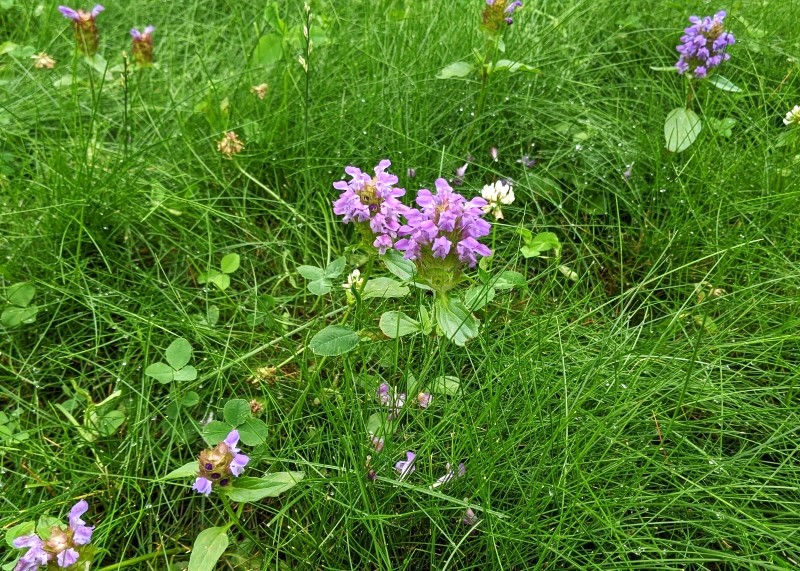
Bee lawn seed is a combination of cool-season turf grass, particularly fine fescues, and flower seeds. Kentucky bluegrass will work as well but requires more input. Recommended flower species include:
Dutch White Clover
Self-heal
Creeping Thyme
Note: These mixes are commercially available at many garden centers or through companies that support or install bee lawns.
3. Seeding Timeline
Late Fall (Ideal): Also known as "dormant seeding" (early Nov to mid-Dec). Spread seed evenly over prepared soil, a seed spreader works well. Winter weather works the seed into the ground, and minimal watering is required.
Spring: Wait until mid-May (after frost danger). Lightly rake the seed into the soil. This requires frequent watering (lightly, 2-3 times per day) until germination.
In both seasons, apply a light straw cover so birds do not eat your seed.
4. Maintenance and Care
Watering: Once established, only water during prolonged drought.
Fertilizing: Dutch white clover fixes nitrogen in the soil, so fertilization is rarely needed.
Mowing:
Wait until the lawn is 5–6 inches high, avoid mowing when the lawn is flowering.
Only remove the top one-third of the plants.
Leave the clippings on the lawn.
Mow in late fall to prep the lawn for winter.
Weeding: some hand weeding may be required the first season

A Buzzing Success
Since establishing our bee lawn, countless individuals walking past our property have stopped to inquire about the lawn and offer compliments. We have definitely seen our lawn abuzz with pollinators. This year’s goal is to try to count and identify our visitors!
References:
Planting and Maintaining a Bee Lawn: https://extension.umn.edu/landscape-design/planting-and-maintaining-bee-lawn#preparing-to-plant-2941611
Consider a Flowering Bee Lawn to Help Pollinators: https://www.canr.msu.edu/news/consider-a-flowering-bee-lawn-to-help-pollinators
What is a Bee Lawn: https://northerngardener.org/bee-lawn/
Photo Credits: Pat Peschman (1,3) University of Minnesota Extension (2)