


Few plants attract summer pollinators with the abandon of Canadian milkvetch. Sitting in a lawn chair on a sunny summer afternoon, it is pure pleasure to lean back and watch the show as proverbial busy bees slurp up nectar and pollen. This ecological gem is native across the entirety of the Midwest. It tends to sprout in prairies and savannas in the wild, setting up shop in rich black to sandy soils. It’s not too fond of clay. In a garden it does best in moist, well-drained soils. It likes full sun but will do well in partial shade.
Like the rest of the Astragalus species, it is mildly toxic. However, native peoples including the Lakota have used the plant for medicinal purposes. The root may be eaten raw or after boiling. It also has been consumed as a broth for treatment of stomach and intestinal complaints. I can’t recommend it myself.
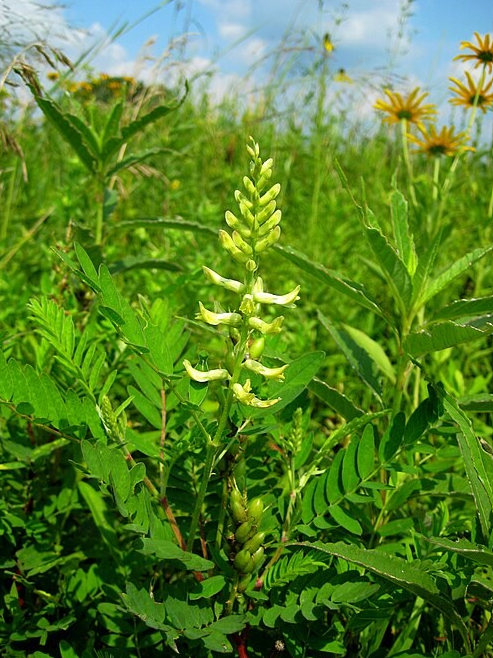
Photo credit: Crazytwoknobs, Wikipedia
Canadian milkvetch grows in clumps to a height of one to three feet. It does best in natural settings when used in landscaping. As mentioned, it attracts a variety of pollinators including several bee species, bumblebees and small butterflies. The leaves are edible and they do attract both rabbits and deer. Our 80 lb. Labradane usually keeps the deer away. But, alas, the occasional rabbit slips through! Those plants that foil the rabbits bloom from June through August. The flowers range from pale yellow to green to white, depending on the variety. They are densely packed in cone shaped clusters that can be up to six inches long. One plant can produce many such spikes, putting on quite a show.
As a member of the legume family, Canadian milkvetch will fix nitrogen into the soil, improving overall soil fertility. It also is a very handy plant for erosion control. So, if you are looking for a resilient addition to strengthen your local ecology, one that supports pollinators and provides natural color during the summer, Canadian milkvetch would be an excellent choice.

Photo credit: Katy Chayke, MN Wildflowers